Stakeholder review, and the one name that has to be on it
A corporate script is read by more people than a commercial storyboard ever is. The sponsoring department, internal communications, a subject matter expert and counsel all have standing to change a line. Comments arrive in four inboxes, contradict each other, and nobody is empowered to settle it.
We ask for one name before anything is written. A single approver who consolidates comments and owns the final call. Two reviewers who disagree then get resolved inside your organisation rather than inside our edit.
The second rule is the expensive one. Counsel reads the script, not the rough cut. A change at script stage is a rewrite. The same change after the shoot is a reshoot, because the sentence belongs to an executive now back at a desk elsewhere. Regulated employers along the 101 corridor feel it hardest, since a recorded claim carries obligations regardless of the video being internal.
Revision rounds are counted and agreed before the shoot. What a round contains sits on the post-production page.
Prompter sessions with an executive who has 40 minutes
Executives book short. Forty minutes is a normal window for a message nine thousand people will watch, and the session is designed backwards from it.
Prepared content is the premise of this format. A script exists, it has been cleared, and the job on the day is delivering it as though it were new. Prompter speed follows the reader, not the reverse. The script gets repunctuated for breath, contractions restored, and any sentence that cannot be said out loud in one pass is broken in two before the camera rolls.
A prompter operator runs the scroll live and marks where each read stops, so a fluffed line is picked up at the top of the sentence instead of the top of the page. We shoot in blocks: one pass for pace, a second over the sections that landed badly, then close coverage on the lines carrying the message. The executive leaves on time.
Two fixes beat direction for a stiff read. Raise the prompter to lens height, and have the person say the opening paragraph once with the glass switched off.
What a subject matter expert is actually for
The subject matter expert is rarely the presenter and is never the approver. Their contribution is accuracy, and it belongs at script stage where it can still be checked cheaply.
An engineer, a pharmacist or a compliance officer knows the thing the video is about. They also write in the register of an internal memo, which is why a script drafted from their notes is unspeakable on camera. The workable sequence is a working session, then a draft written for the spoken voice, then the expert checking it for what is now wrong rather than what is now missing.
Where the expert does appear on camera, the material is prepared and rehearsed against the script everyone approved. Drawing an unrehearsed story out of somebody is a separate craft, and it lives on the testimonial page.
Dated numbers are the quiet cost. A figure spoken aloud with a year attached puts an expiry date on the whole film.
Localisation, and who owns the accessibility obligation
Accessibility on an internal video is somebody's job title, not a preference. Usually it is a procurement lead or an IT accessibility owner, and they enter the chain late unless invited early.
Section508.gov, the federal government's own resource, publishes guidance for video used by federal agencies, and the US Access Board maintains the Information and Communication Technology Accessibility Standards behind that requirement. Any company selling into a federal agency inherits the question, often at the point a file is rejected by a portal. Audio description is the part people miss: where the picture carries information the narration never states, a described track has to be scoped, not retrofitted. Delivery files themselves are covered on the post-production page.
Localisation costs far less when planned. A film built with on-screen text in a graphics layer, and voice separated from music and effects, subtitles into six languages without a re-edit. A film with text burned into the picture does not.
Intranet, LMS, and how long a module stays true
Corporate video is watched somewhere specific: an intranet page, a learning management system, an email embed, or a room with a ceiling speaker. Each destination changes the file. The learning system changes the structure.
A training piece built as one 14-minute film gets reshot in full when a policy changes. Built as six modules under three minutes each, it gets one module replaced.
Shelf life is set by details that look harmless in a draft. A named executive, an office about to be consolidated, a headcount, a product name mid-rebrand. Where a name must appear, put it in a lower third rather than in the audio.
Event producers recognise the shape of an all-hands immediately: a run of show, a stage manager, a house audio position, a load-in window. Communications teams brief the same thing as a video shoot, and both readings are right. Message, approvers and distribution belong here. The room, the camera positions, the desk feed and any same-day cut belong to live event coverage.
Filming inside a working building
The business does not stop for the shoot. That one fact sets nearly every constraint on this work.
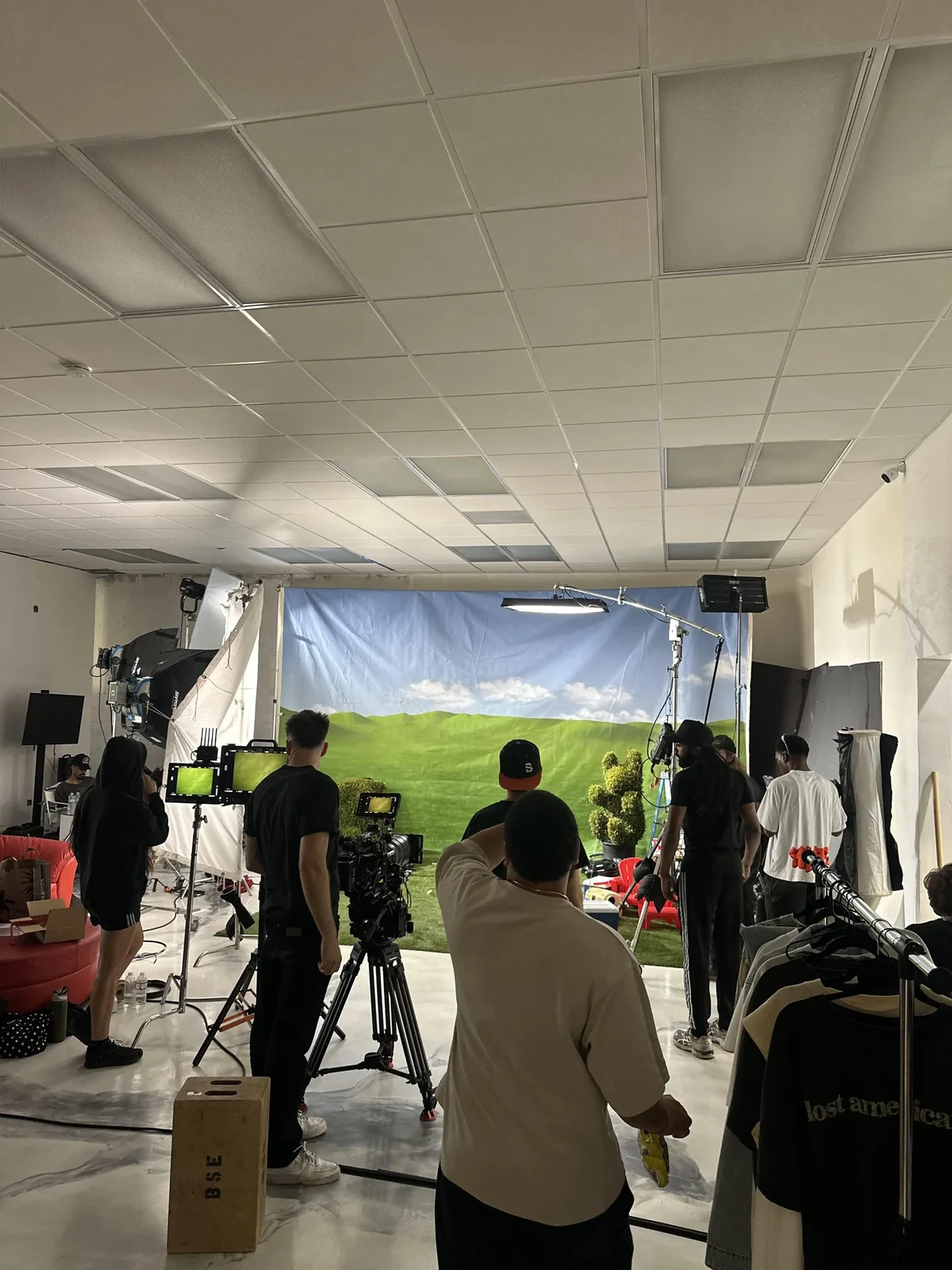
Access comes first. Crew names go in for visitor badging days ahead, not on the day. Escorts are assigned per person in secure areas, which caps how many of us can be inside at once. Many sites require crew to sign the company's own non-disclosure agreement, plus a safety induction and protective equipment before anyone reaches the floor. We ask for all of it at the scout, which inside an operating facility is really a permissions scout: what may be in frame, who may appear, which doors open, which screens have to be dark.
Then the floor. Noise runs on shift patterns, so the quiet hour is a real hour and it can be found. Laboratories and clean rooms restrict what enters and what can be plugged in. Monitors showing customer data cannot be in shot, and neither can the whiteboard nobody thought about. Shoots involving employees' children fall under California entertainment work permit rules, covered on the video production overview. Site safety sits with Cal/OSHA, and the building's own rules usually go further than ours.
Business-hours filming is the request we get most, and the answer is usually yes. We work out of Westlake Village, near the campuses in Thousand Oaks and offices across Ventura County and Los Angeles County.
Frequently asked questions
How much does a corporate video cost?
Scope leads: how many finished videos, how many people appear, how many buildings the crew has to be badged into, whether a script is written and legally reviewed, and how much animation or localisation the edit carries. Approval depth is the hidden driver, because every additional reviewer buys calendar. Studio 47 counts revision rounds into the scope before the shoot rather than after.
How long does it take to make a corporate video?
Three to eight weeks is the published range: about a week of pre-production covering script, approvals and site access, one to three shoot days, then two to four weeks of edit, graphics and review. Approval speed moves that further than production does. An eight week deadline is workable when one named approver is in place from the first draft.
How do you get executives comfortable on camera?
Shorten what they have to do. Forty minutes covers a scripted message of two to three minutes when the script is locked and the room is lit before they walk in. Raise the prompter to lens height, have them read the opening paragraph once with the glass switched off, and shoot in blocks so a fluffed line resumes at the top of the sentence.
What makes a corporate video take longer than planned?
Approvals, almost always. Four departments commenting into four inboxes with nobody empowered to settle it will out-delay any production problem. Counsel reading the rough cut instead of the script is the expensive version, since a change there is a reshoot rather than a rewrite. Added locations, animation and second-language versions stretch it too.
Can one shoot day produce more than one video?
Yes, and it is the cheapest lever available here. One day inside a building can yield an executive message, a recruiting film and a set of short cuts, because badging, lighting and the room booking are paid for once. Decide it before the call sheet is written. An all-hands with an audience adds live event coverage to the same day.
Do training videos need the same production as marketing videos?
No. Training rewards clarity, screen capture and modular structure over cinematic polish, and the audience is already committed, so runtime matters less. Build it as six modules under three minutes rather than one fourteen minute film, each with its own opening and end point, and a policy change replaces one module.
What should we prepare before the crew arrives?
Three things. A quiet room with a door that closes, because sound is harder to fix than picture. A decision on who is speaking and what they are covering, so we are not writing on set. And someone with authority available on the day, since the fastest projects are the ones where the person who can approve a change is in the building.