Coverage planned against a run of show
Camera positions at a live event are assigned against the run of show, not against a shot list. The document that matters is the one the stage manager is holding, and it slips.
Four positions cover most rooms. A locked wide that never stops rolling is the safety net, and it is the angle that saves the edit when something happens off-plan. A long lens holds faces at a distance the audience cannot see. A roaming operator takes reaction and the things nobody scheduled. The fourth position is assigned to the single moment that cannot be missed, whichever it is: the reveal, the award, the headliner walking on.
Walk the room before doors. Sightlines that look clean at 2pm disappear behind a standing crowd at 8pm, and a position agreed in an empty room changes once the barricade goes in.
Timecode, genlock and keeping every camera on one clock
Cameras have to share a time reference or the edit becomes manual labour. Timecode jam-syncing, or a wireless timecode box on each body, stamps every clip against the same clock so a four-camera two-hour programme assembles on a timeline in minutes. Without it an editor lines clips up by eye and by waveform, for as long as the programme ran.
Clapping in front of each camera is not a plan. It gives one sync point per card, and cameras that stop and start independently produce a lot of cards.
Genlock is a different mechanism and only matters where a switched or streamed feed is involved. It locks cameras to a common reference so the switcher cuts between them cleanly. A recorded multicam that never touches a switcher does not need it. A show feeding IMAG screens or a live stream does.
House systems complicate this. A venue video system may run at a frame rate the camera package is not shooting at, which is a question for the technical director during load-in.
The board feed is only half the event audio
Event audio decides whether the footage is usable. The board feed from front of house is the clean source: microphones, walk-in music, everything the room is hearing, without the room itself. It is also lifeless on its own. A recap cut entirely from a board feed sounds like a rehearsal in an empty hall.
Blend a room mic in and the applause and the noise of a full space come back.
Run a separate recorder on the feed, independently powered. A feed that drops for ninety seconds during the one speech that mattered is not recoverable.
The venue A1 is the person to talk to first. They control which outputs exist on that desk and at what level. They also run frequency coordination in a room already full of wireless, and a radio microphone brought in without coordination will step on a system somebody is running the show from.
A same-day recap is designed before doors open
Same-day turnaround is a production design decision, not a favour asked at 11pm. Everything that makes it possible is settled beforehand: an editor on site with the project built, a structure and a music bed agreed in advance, selects pulled while the programme runs, and an approver in the room rather than reachable in the morning.
The approver is the part clients underestimate. A recap finished at 1am and approved at 10am is not a same-day recap.
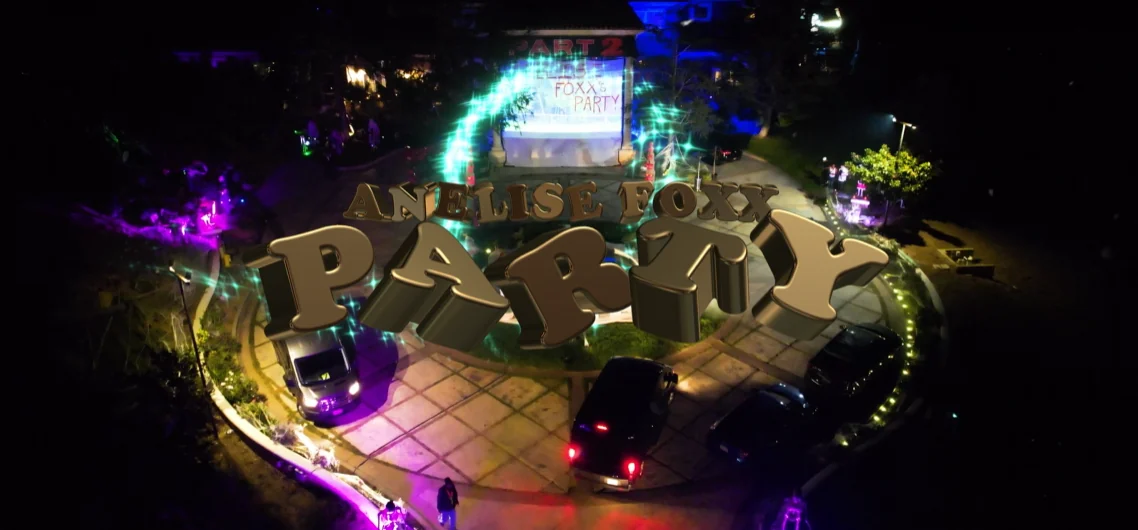
Brand and marketing managers want something different out of the day than event producers do. An activation is a commercial asset shoot happening inside an event, and the recap serves a media plan rather than a memory. That changes what gets shot: product in frame, brand elements clean, and coverage left over for campaign versions after the hero recap ships. Studio 47 cut the Jamie Foxx Halloween event recaps in 2023 and 2024 on that footing, and carries a Rolling Loud credit.
You get one take at a live event
Everything above exists because the event does not repeat. That shapes how media is handled on site more than anything else.
Cards are offloaded to two destinations before anything is reformatted, with a checksum-verified copy rather than a drag and drop that reports a success it cannot prove. Cards are labelled and physically separated into shot and cleared, so nobody reformats an unloaded card at midnight. On larger jobs that is one person's only responsibility, and the offload starts during the event rather than at load-out.
Attendees on camera are handled through notice rather than paperwork. Entrance signage and ticket terms that already cover filming are what most organisers rely on, and the venue usually has that in place before the crew arrives. Confirm it rather than assume it. A featured individual, someone who ends up carrying a section of the recap, needs a signed individual release, which the testimonial video page covers.
Drones over an audience are mostly unavailable. Flight over people is prohibited under 14 CFR 107.39 unless the person is directly participating in the operation, is under a covered structure or inside a stationary vehicle, or the operation meets one of the Category 1 to 4 requirements in Subpart D. Category 1 requires an aircraft weighing 0.55 pounds or less at takeoff with no exposed rotating parts that would lacerate skin. Aerials at events are normally flown before doors over an empty site. The property and aerial work page carries the rest of those rules, and the Los Angeles County and Ventura County pages cover local rules city by city.
Load-in, sightlines and the shot you cannot repeat
The plan for an event is built on the room before it is built on the run of show.
Load-in decides everything. If the crew gets in the morning of, positions are wherever cable can reach. If we can rig the day before, cameras go where the shot is: a locked wide from the back of the room, a long lens on the riser for faces, a roaming operator on the floor. The difference in the finished film is enormous and it costs one extra half day.
Sightlines are the next constraint. Every good camera position competes with a seat somebody paid for, so positions get agreed with the venue and the organiser in advance rather than negotiated at doors. A camera moved fifteen feet at the last minute usually ends up behind a pillar.
Then the moments that only happen once. The award handed over, the keynote line the client will quote for a year, the crowd reacting to a reveal. Those get assigned to a specific camera in advance, with a second angle as insurance, because there is no second take.
Power, audio access and a place to park a cart are the unglamorous half of the job. We confirm all three with the venue before the day, which is why our event coverage rarely produces surprises.
Frequently asked questions
How much does event videography cost?
Hours of coverage set the base, then the number of camera operators, how complex the audio is, how many deliverables come out of the day, and how fast the edit has to land. Venue conditions move it as well, since a short load-in window or a union rigging requirement changes the crew. A same-day recap costs more than the same recap a week later.
How many cameras does my event need?
Three or four in most rooms. A locked wide that never stops rolling is the safety net, a long lens holds faces from a distance the audience cannot see, a roaming operator takes reaction, and a fourth position covers the one moment that cannot be missed. Studio 47 assigns them against the run of show, so parallel sessions need parallel cameras.
How far in advance should I book an event videographer?
Three to four weeks is comfortable, and earlier is better for anything with a stage. The reason is access rather than availability: getting into the venue the day before to rig changes what the finished film looks like, and that has to be arranged with the venue rather than with us. For a same-week booking we can still cover the room well with a smaller unit.
How is speaker audio captured at a live event?
From the venue's mixing desk, never from camera microphones alone. The board feed carries the microphones and walk-in music without the room, so a room mic is blended back in or the recap sounds like a rehearsal in an empty hall. A separate recorder runs on that feed under its own power, and the venue A1 confirms which outputs exist.
What is the difference between full event coverage and a highlight film?
Full coverage records the sessions end to end, camera by camera, and delivers them as watchable records. A highlight film is a two to three minute recap cut for marketing. Most events want both, from one crew on one day. A same-day recap is designed before doors, because it needs an editor on site, an agreed structure and an approver in the room.
What does the venue need to provide for the video crew?
A load-in window, power at the camera positions, an output from the audio desk, and confirmation of what may be rigged and where. Ask early about union labour, since some venues require their own crew for rigging and power. Studio 47 walks the room before doors, because a position agreed in an empty hall disappears behind a standing crowd.
Do you fly a drone over an audience, and what are the restrictions?
Flight over people is prohibited under 14 CFR 107.39 unless the person is directly participating in the operation, is under a covered structure or inside a stationary vehicle, or the flight meets one of the Category 1 to 4 requirements. Aerials at events are normally flown before doors over an empty site, and controlled airspace adds an ATC authorisation on top.