Twilight windows, elevations and the light a listing needs
Civil twilight outside Alaska is the 30 minutes before official sunrise and the 30 minutes after official sunset. That is the whole usable window for a twilight exterior, which is why it is scheduled as its own visit or as the deliberate tail of a shoot day.
The rest of the day is scheduled around which way the house faces. A west-facing rear elevation wants late afternoon, an east-facing front wants morning, and booking them the other way round photographs half the property into its own shadow.
The coast complicates it. Marine layer along Malibu, Santa Monica and the Ventura shoreline holds the light flat well past the hour a schedule assumed, and a grey exterior at 9am does not turn golden because a listing goes live Thursday.
Interiors are a balancing problem, not a light-level problem. A room lit for the room blows the windows out, and a room lit for the windows goes muddy. Bracketed exposures and window pulls fix that, but only if the frames were captured on a locked-off camera.
Walkthrough grammar, and how a camera moves through a house
A property video has a sequence, and buyers notice when it is missing. Approach, entry, principal rooms, then the feature the property is actually being sold on, then the outdoor space. The order tells a buyer what the property thinks it is.
Movement has rules of its own. A gimbal move should reveal something rather than wander toward it. Rooms get entered on a line, not a curve, because a curved entry makes the geometry read as crooked. Move speed is matched between shots so cuts feel continuous, and doorway transitions carry the walkthrough between spaces.
Static frames still matter. Every principal room gets one held hero frame alongside the movement, because a buyer scrubbing a video pauses on a still, not a push.
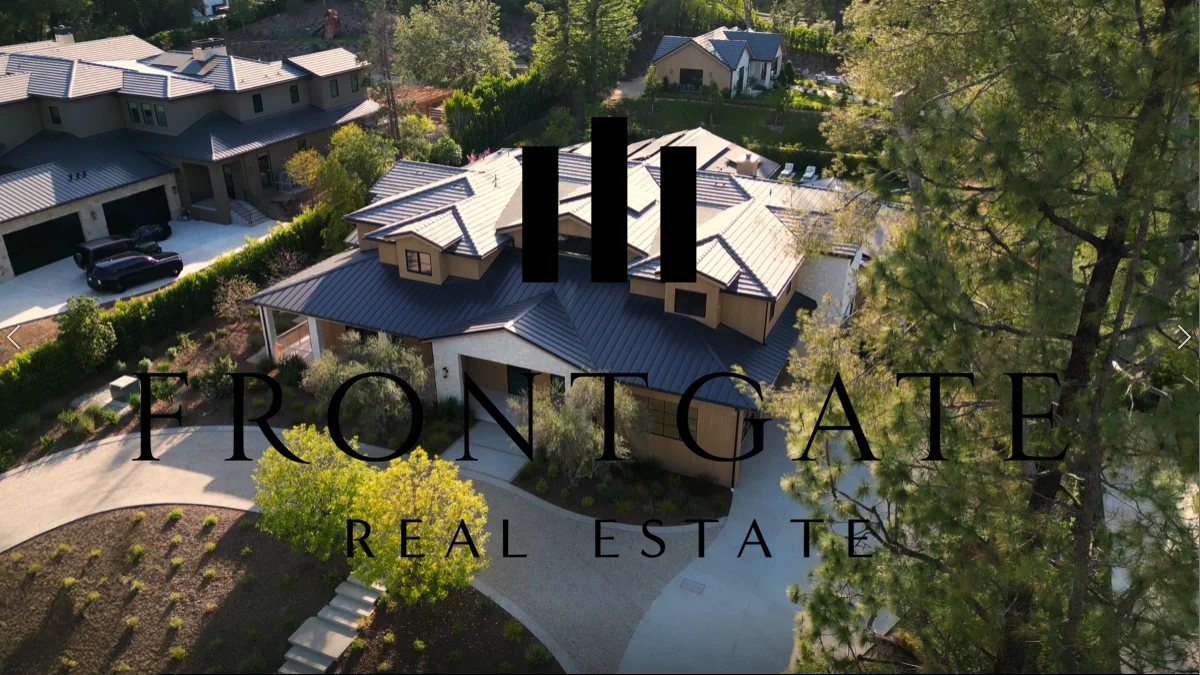
Studio 47 shot the property film for Compass and Front Gate Real Estate on that structure.
The MLS cut, the agent-branded cut and the vertical alternate
Agents need more than one version, for different systems. The unbranded cut exists because many MLS systems restrict agent branding inside listing media, so the version going to the MLS and the portals carries the property and nothing else. The agent-branded cut has the agent on camera, the logo and the contact details. A vertical alternate is pulled for the agent's feed.
Developers and hospitality operators buy something different under the same heading. A property film for a development or a resort is a marketing asset rather than a listing asset, which removes the listing date and the MLS branding constraint at once and replaces them with a brand approval chain and a longer usage life. Those briefs run closer to commercial work, scheduled around construction completion rather than a Thursday go-live.
Turn time against the listing clock
A listing goes live on a date and everything works backwards from it. That date is set by the seller and the brokerage, and it does not move because the weather did. Three things compress the shoot window. An occupied property means the sellers have to be out, which is a family's schedule rather than a production's. Staging arrives on its own calendar, and the house is not photographable before it lands or after it leaves. Pets and tenants narrow the hours further.
The edit is the fastest part of this service, for a structural reason: the shape of the video is known before the shoot. There is no story to find in the footage. That is true of no other service here, which is why turn time on a listing behaves nothing like turn time on a campaign film.
What a drone actually adds to a listing film
Aerial footage sells context, not the house. It answers questions a walkthrough cannot: how the lot sits, what backs onto it, how far the water or the ridge really is, whether the neighbours are close.
That means the useful drone shots are usually the boring ones. A slow reveal over the roofline that shows the lot lines. A rise from the front door that puts the street in frame. A high hold that shows the property against the hillside behind it. The dramatic orbiting move looks impressive and tells a buyer almost nothing.
Height is not the point either. Most of the value sits between twenty and eighty feet, where the house is still the subject. Push higher and it becomes a map.
We fly licensed and insured, and there are places we cannot fly, mostly near airports and over people. Both of those are worth knowing at the scouting stage rather than on the morning, because the alternative is usually good: a tall pole, a second storey window or a neighbouring rise can produce the elevated angle without an aircraft at all.
For a listing that will run as social content too, we shoot the aerial in both orientations while we are up, since the vertical crop of a horizontal aerial almost never survives.
Frequently asked questions
How much does real estate videography cost?
Property size leads, then whether aerials are included, whether a twilight visit is added, how many versions come out of it, and how tight the turnaround has to be. Occupied homes cost schedule rather than money, since the window narrows around sellers, staging and pets. Studio 47 scopes a listing backwards from the go-live date.
Do you need a licence to fly a drone for real estate video?
Yes, and we hold one. Commercial drone work in the United States requires an FAA remote pilot certificate, and we carry insurance for it. The practical thing for you is knowing where we cannot fly, mostly near airports and over people, which we check at the scouting stage rather than on the morning of the shoot.
What time of day films best for a property?
Morning for an east-facing front, late afternoon for a west-facing rear. Booked the other way round, half the property photographs into its own shadow. Civil twilight, the 30 minutes after official sunset, is the entire window for a dusk exterior, so it gets its own visit. Coastal listings add a third factor, because the marine layer holds the light flat well past the hour a schedule assumed.
Vertical Reels or MLS video: which does my listing need?
Both, from one shoot. The MLS and the portals take an unbranded cut, since many systems restrict agent branding inside listing media, and one to two minutes is the usual length. The agent-branded cut carries the agent on camera and their contact details. Studio 47 plans the vertical alternate at the same visit, because composing it during capture beats cropping it afterwards.
Are there airspace restrictions for drones in this area?
Yes, and they are the constraint that catches agents out. Class B, C and D airspace, and the surface area of Class E designated for an airport, require prior authorisation from Air Traffic Control. That covers wide stretches of ground near LAX, Burbank, Van Nuys, Santa Monica and Camarillo. Treat authorisation as a scheduling input, because it is neither guaranteed nor instant.
How long does a listing video take to turn around?
Twenty four to forty eight hours for a standard listing, which is the pace the market runs at. A twilight shoot delivered the next morning is normal for us. Larger properties with a longer walkthrough, drone coverage and multiple cuts take two to three days. Tell us the listing date and we will work backwards from it.
How fast can a listing video be shot and delivered?
Faster than any other kind of video here, because the shape of the film is known before the shoot and there is no story to find in the footage. Access sets the real date. An occupied home means the sellers have to be out, staging arrives on its own calendar, and weather decides whether the aerial pass happens at all.